
Photo Credit: Barek
Mefruşat is a site-specific installation produced from waste plastic and waste textiles. In form, it alludes to a quilt and/or a veil; essentially to something that covers and does so with a feminine affinity.
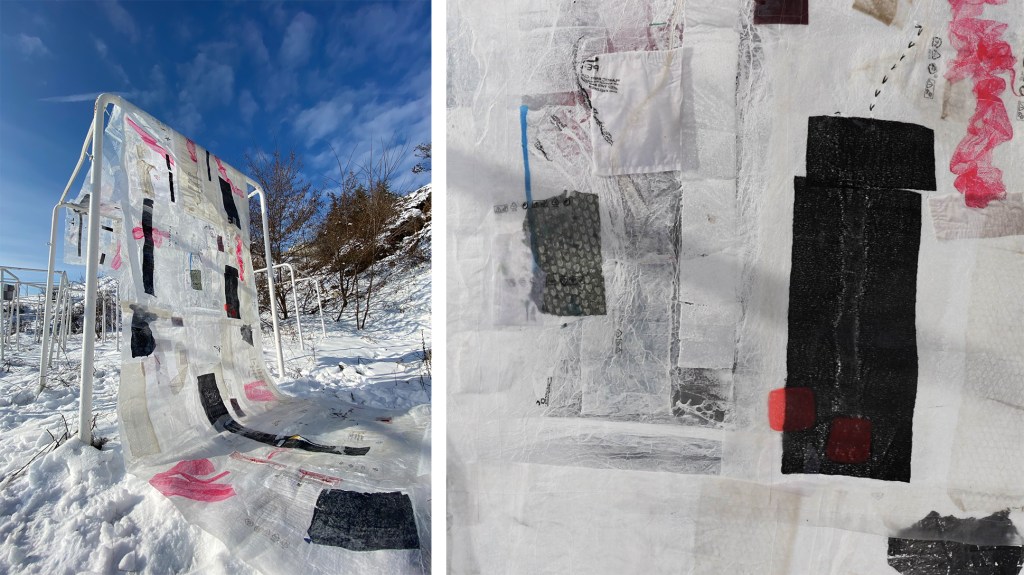
This work approaches sustainability as an uncovering of the inherent potential within the disregarded. The perceived duality between “useful” and “lesser” has not served us well enough, neither in gender politics nor in environmental consciousness; sustainability requires no part of the whole to be seen as secondary. With Mefruşat, artists redefine materials, processes and places that have been pushed to this “lesser” category.
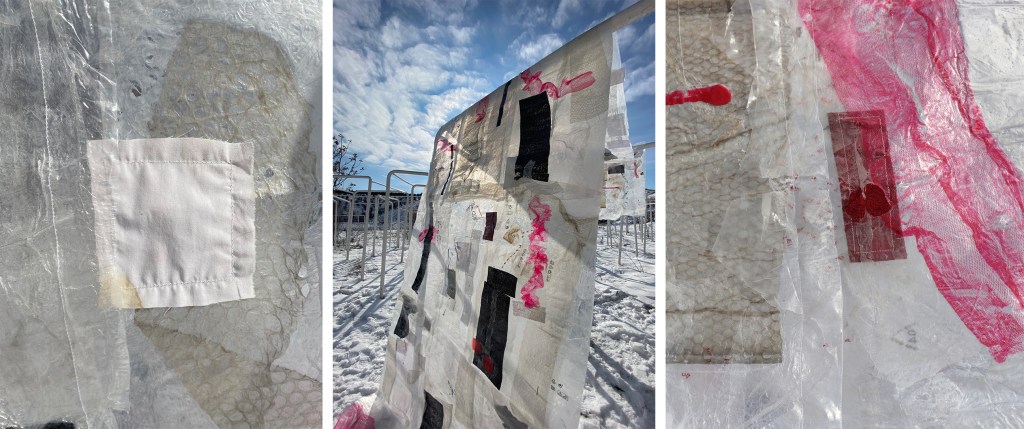
Waste materials of plastic and textile are combined with a production process of modified domestic acts, which are traditionally understood as subordinate to the masculine interests. Artists rely on the often undervalued “women’s work” of homemaking -such as ironing, cleaning and sewing- to produce the “fabric” of the installation from similarly undervalued materials. The site is chosen as a seemingly abandoned part of the university campus filled with mostly unused metal box frames. The piece of “fabric” is laid over one of these frames as an embrace; an act of solidarity between the abandoned and the feminine.
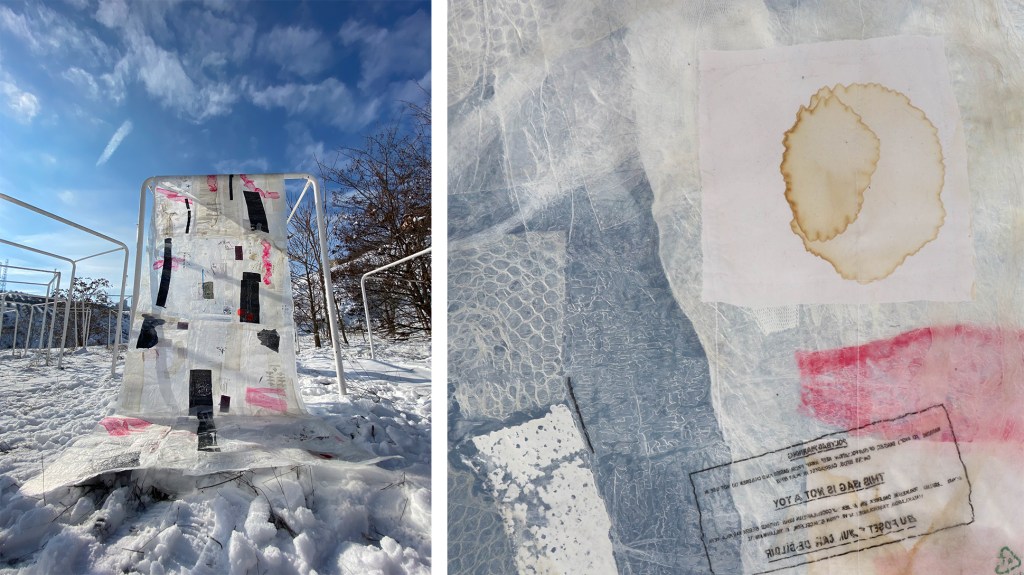
The intent is not to inject an otherwise missing value into places, practices or materials. It is to shift the perspective to recognize the existing, yet often overlooked, merit within them. Waste is raw material if one chooses to handle it, “the feminine” is not supplementary but is vital if one chooses to claim it.

This work is produced within the scope of Swiss-Turkish Art Project, Womanhood and Sustainability exhibition.


 SOJÖRN